

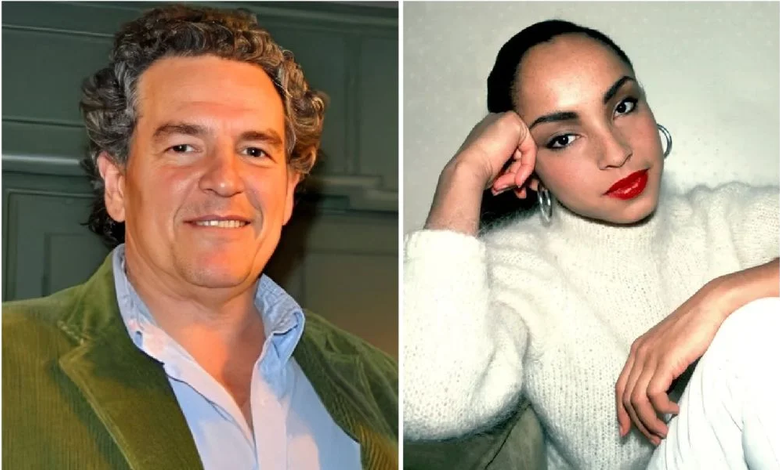
Carlos Scola Pliego is a Spanish film professional whose name is often searched because of his former marriage to the internationally known singer Sade Adu. However, Carlos Scola Pliego also had a career behind the camera, working in assistant directing and later directing and writing film projects of his own.
His professional credits connect him with productions such as Never Say Never Again, Christopher Columbus, and the documentary Ngira: Gorilas en la montaña. His relationship with Sade brought him additional public attention, but much of his private biography remains undocumented.
This article looks at what can be established about his film career, his connection with Sade, and the personal details that should not be treated as fact without reliable evidence.
1. Who Is Carlos Scola Pliego?
Carlos Scola Pliego is a Spanish filmmaker who worked mainly behind the camera. His professional credits include assistant directing, documentary filmmaking, writing, and production work. Although he is not a mainstream celebrity, his name attracts attention because of his marriage to British-Nigerian singer Sade Adu.
Sade became internationally famous during the 1980s with songs such as “Smooth Operator,” “The Sweetest Taboo,” and “No Ordinary Love.” Her official biography confirms that she married Spanish film director Carlos Scola Pliego in 1989.
However, his story is not limited to his relationship with the singer. Carlos had experience in the Spanish and international film industries, including work on several productions during the 1980s. He later directed and wrote projects of his own.
Unlike actors and musicians who regularly appear in interviews and public events, Carlos has maintained a very private profile. As a result, information about his childhood, family, education, and later personal life is limited.
The most useful way to understand him is through the film credits and reliable reporting that are available, rather than through unsupported online claims.
Is Carlos Scola Pliego the same person as Carlos Scola?
Film records commonly list him under the professional name Carlos Scola. Some records also use the fuller name Carlos Scola Pliego.
For example, the 1985 television miniseries Christopher Columbus lists an assistant-director credit under the longer name. Other film records use Carlos Scola.
These names appear to refer to the same film professional. The variation is useful to remember when researching his career because searching only one version may leave out some of his credits.
2. Carlos Scola Pliego’s Early Life and Background
Reliable public information about Carlos Scola Pliego’s early life is limited. Unlike well-known actors, he did not build a career around public appearances or personal interviews.
Spanish newspaper EL PAÍS describes him as a Madrileño, meaning a man from Madrid. Its 2024 retrospective about Sade’s years in the Spanish capital also explains that he was developing a career in the audiovisual industry when he met the singer.
This provides a useful starting point for understanding his background. However, it does not establish every detail of his childhood or education.
Where was Carlos Scola Pliego born?
The available reporting connects Carlos with Madrid, Spain. A detailed, authoritative public record confirming his exact date of birth or a specific birthplace has not been identified.
Some online biography pages publish precise birth years and ages, but they do not consistently provide dependable evidence. It is therefore better not to repeat an exact age as fact.
What is known about his education?
His formal education is also not clearly documented in reliable public sources.
There is no sufficiently strong evidence identifying a particular university, film school, or training institution that he attended. His professional credits, however, show that he gained practical experience in film production.
That distinction matters. A person’s work history can be documented even when their school or university background is not publicly available.
His connection with Madrid’s film industry
Madrid has a long history as an important center for Spanish film and television production. Carlos’s association with the city’s audiovisual industry placed him in an environment where local productions and international projects could overlap.
His early work as an assistant director also connected him with film crews operating in Spain. These professional experiences helped form the basis of his later work as a director and writer.
3. Carlos Scola Pliego’s Film Career
Carlos Scola Pliego developed a career in film production rather than acting. His work included responsibilities behind the camera, where professionals help organize and complete productions.
His filmography includes projects from Spain and international productions that used Spanish locations or production teams.
Working as an assistant director
An assistant director plays an important role in organizing a film production. Depending on the project, the job can involve coordinating schedules, helping prepare scenes, communicating with departments, and supporting the director’s production plan.
The position is different from being the main director. An assistant director helps make the filming process work, while the director is generally responsible for guiding the creative vision of the production.
Carlos’s early credits show experience in this area.
His listed work includes productions such as:
- Dos y dos, cinco (1981)
- Black Commando (1982)
- Hundra (1983)
- G’olé! (1983)
- Scarab (1983)
- Curse of the Pink Panther (1983)
- Eleni (1985)
- Christopher Columbus (1985)
The exact responsibilities differed between productions. Some records identify him as a second assistant director, while others list assistant-director work for the Spanish production unit.
His connection to Never Say Never Again
One of the most recognizable titles associated with Carlos Scola is Never Say Never Again, released in 1983.
The film starred Sean Connery as James Bond and was directed by Irvin Kershner. It was a major international production with filming connected to several locations.
Film records list Carlos Scola as a second assistant director for the Spain portion of the production. The role is marked as uncredited, meaning his name did not appear in the standard on-screen credits.
This distinction is important. Carlos was part of the production team, not the film’s principal director or a leading creative figure.
Even so, the credit demonstrates his involvement in an internationally recognized film project.
Work on Christopher Columbus
Another notable production connected to Carlos was the 1985 television miniseries Christopher Columbus.
His assistant-director credit appears under the fuller name Carlos Scola Pliego. The production included several episodes and involved an international cast and crew.
This credit is particularly useful when researching his professional identity because it connects the full name with the shorter form Carlos Scola found in other film records.
His work on different productions shows that his experience extended beyond a single film or one type of project.
4. Carlos Scola Pliego as a Director and Writer
Assistant directing was an important part of Carlos’s career, but he also took on creative responsibilities of his own.
His film records identify two projects that are especially relevant: Ngira: Gorilas en la montaña and Donde termina el corazón.
These productions show a move from supporting other filmmakers to taking responsibility for directing and writing.
Ngira: Gorilas en la montaña (1988)
Ngira: Gorilas en la montaña is one of the directing projects associated with Carlos Scola.
Film records identify him as a co-director and writer, with production credits also associated with the project.
The title refers to gorillas in a mountain setting. It represents a different type of filmmaking from the commercial productions on which Carlos had previously worked.
Documentary filmmaking requires a different approach from scripted entertainment. Instead of building a story entirely around fictional scenes, documentary creators work with real subjects, locations, and events.
The available public information about the production is limited, so it would be unwise to make detailed claims about its audience, reception, or impact without stronger records.
Nevertheless, the credit is an important part of his professional history.
Donde termina el corazón (1989)
Another project connected to Carlos is Donde termina el corazón, a Spanish-language production released in 1989.
Film records credit him as both director and writer.
This is significant because it shows that his work was not limited to assisting other directors. He also took responsibility for shaping a project’s story and creative direction.
Directing and writing require different skills from assistant directing. A director must guide the overall production, while a writer develops the story, dialogue, and structure.
Carlos’s credits therefore suggest experience in several areas of filmmaking.
Why these projects matter
His directing and writing credits provide a fuller picture of his career.
When people search for Carlos Scola Pliego, they often find information about his marriage to Sade before they discover his professional work. However, his filmography shows that he was already involved in the industry before the relationship became widely known.
His career deserves to be considered independently of his personal life.
5. Carlos Scola Pliego and Sade Adu: Their Marriage
The relationship between Carlos Scola Pliego and Sade Adu is the best-known part of his personal history.
Sade Adu is the lead singer of the band Sade, which became internationally successful during the 1980s. The group’s music combines elements of soul, jazz, pop, and rhythm and blues.
Sade’s official biography confirms that she married Spanish film director Carlos Scola Pliego in 1989.
How did Carlos meet Sade?
A 2024 feature published by EL PAÍS provides useful background about their connection.
The newspaper reports that Carlos was working in the audiovisual industry in Madrid and assisted with three music videos connected with Sade’s 1985 album Promise. It also describes how Sade later spent time in Madrid and reconnected with him.
According to the report, their relationship developed during this period.
This account provides a documented professional context for their connection. However, detailed personal accounts of their early relationship are limited.
When did Carlos Scola Pliego and Sade marry?
Sade’s official biography confirms that the couple married in 1989.
EL PAÍS gives October 1989 as the month of their wedding and reports that the ceremony took place in a Spanish castle, based on contemporary British press coverage.
Some online websites publish an exact wedding date, but the strongest sources reviewed here do not establish one consistently. For that reason, 1989 is the safest date to use.
Did they live in Spain?
The EL PAÍS retrospective describes Sade’s time in Madrid and her relationship with Carlos during that period.
The article explains that she spent time in the Spanish capital after becoming internationally famous. It also discusses her connection with Carlos and her involvement in the recording period surrounding Stronger Than Pride.
Their connection with Madrid is therefore an important part of the publicly reported story.
6. What Happened to Their Marriage?
Carlos Scola Pliego and Sade Adu did not remain married permanently.
Many biographical and film-related records list their marriage as ending in divorce in 1995. However, Sade’s official biography confirms the 1989 marriage without providing a divorce date.
It is therefore sensible to describe 1995 as the commonly reported divorce year rather than claiming that every detail of the legal process is confirmed by the official biography.
Why did Carlos Scola Pliego and Sade divorce?
The exact reason for their divorce has not been established through a detailed, reliable public account from both people.
Sade has spoken in interviews about difficult periods in her personal life, including the emotional impact of a relationship ending. However, those comments should not be used to invent a complete explanation for the marriage’s breakdown.
Celebrity relationship stories can easily become distorted when websites repeat claims without identifying their original sources.
The responsible approach is to separate the documented timeline from speculation about private disagreements or personal decisions.
Did they have children together?
There are no publicly documented children from Carlos Scola Pliego and Sade Adu’s marriage.
Sade later became a parent, but that happened after her relationship with Carlos had ended. Her later family life should not be confused with her marriage to him.
7. What Happened to Carlos Scola Pliego After His Marriage?
One of the most common questions about Carlos Scola Pliego concerns his life after his divorce from Sade.
Unlike his former wife, he has not maintained a regular public profile. There are few widely available interviews or recent reports that provide a detailed account of his personal circumstances.
This lack of information does not automatically mean that he stopped working or disappeared from society. It simply means that dependable public information about his later life is limited.
His later film-related work
A later production credit connects Carlos Scola with the 2007 film Goal II: Living the Dream.
The film is part of the Goal! football movie series. Film records list Carlos in the additional crew as a dialogue coach.
Dialogue coaching is different from directing or assistant directing. Depending on a production’s needs, it may involve helping performers with language, pronunciation, or the delivery of spoken lines.
This credit is useful because it shows that his professional film-related work extended beyond the late 1980s.
However, it does not provide enough information to establish his full career history after 2007.
Where is Carlos Scola Pliego now?
His current residence and daily activities are not reliably documented in the public sources reviewed for this article.
Some websites make claims about his present location or professional status, but these statements are not consistently supported by dependable evidence.
It is more accurate to say that he has maintained a low public profile than to guess where he lives or what he does today.
Is Carlos Scola Pliego still working in films?
There is no strong recent filmography or authoritative interview confirming his current professional activity.
His known credits include work from earlier decades and the 2007 Goal II: Living the Dream production. That information does not establish whether he continued working privately or retired afterward.
Without a reliable update, his present career status remains unclear.
8. Carlos Scola Pliego’s Age, Net Worth, and Personal Details
People searching for Carlos Scola Pliego often want to know his age, birthday, wealth, family background, and current lifestyle.
Unfortunately, reliable information about these subjects is limited.
What is his age?
His exact date of birth has not been established through a strong public source. Therefore, it is not possible to provide a dependable age.
Websites that publish an exact birth year should be checked carefully. Repeated information is not necessarily accurate when the original source is unclear.
What is his net worth?
There is no verified public figure for Carlos Scola Pliego’s net worth.
His film career included different production roles, but publicly available credits do not reveal his total earnings, assets, investments, or financial situation.
Online estimates should not be treated as confirmed financial information.
What is known about his family?
Apart from the publicly documented relationship with Sade Adu, detailed information about his parents, siblings, and wider family is not readily available from reliable sources.
It is better to respect those privacy limits than to repeat unsupported claims.
Is he related to another famous filmmaker?
A shared surname can sometimes lead people to assume that two film professionals are related. However, a matching surname alone does not establish a family connection.
No reliable evidence reviewed for this article establishes that Carlos Scola Pliego was related to Italian filmmaker Ettore Scola.
9. Why Is Carlos Scola Pliego Still Being Searched Online?
There are several reasons his name continues to attract interest.
First, his marriage to Sade Adu connects him with a singer who has maintained an important place in international music. Fans often search for information about the people who played a role in the lives of famous musicians.
Second, Carlos had a film career of his own. His work on international productions and his documentary directing credits give readers additional reasons to explore his background.
Third, his private lifestyle creates unanswered questions. When a public figure has few interviews or recent appearances, online searches often increase as people look for basic biographical details.
However, the lack of information can also encourage speculation. Some websites publish exact ages, net worth figures, or relationship stories without reliable evidence.
A useful biography should not fill every information gap with guesses. It should explain what is known and clearly identify what remains private.
10. What Makes His Story Interesting?
Carlos Scola Pliego’s story offers an interesting example of a film professional whose public identity became closely connected with a famous musician.
His career involved different responsibilities. He worked in assistant directing, contributed to international productions, and later took on directing and writing projects.
His marriage to Sade brought his name to a wider audience, but the relationship should not be treated as the only important part of his life.
His story also highlights the importance of people who work behind the camera. Films depend on many professionals whose names may not be familiar to audiences. Assistant directors, production staff, dialogue coaches, and other crew members all contribute to the process of making a film.
Their work may not attract the same attention as actors or directors, but it remains an important part of the industry.
Frequently Asked Questions
1. Who is Carlos Scola Pliego?
Carlos Scola Pliego is a Spanish filmmaker who worked in assistant directing, documentary filmmaking, writing, and production. He is also publicly known as the former husband of singer Sade Adu.
2. Is Carlos Scola Pliego the same person as Carlos Scola?
Film records use both names in connection with the same filmmaker. Some credits use Carlos Scola, while the 1985 Christopher Columbus miniseries lists the fuller name Carlos Scola Pliego.
3. Was Carlos Scola Pliego married to Sade Adu?
Yes. Sade’s official biography confirms that she married Spanish film director Carlos Scola Pliego in 1989.
4. When did Carlos Scola Pliego and Sade Adu divorce?
Their divorce is commonly reported as taking place in 1995. Sade’s official biography confirms their marriage in 1989 but does not give a divorce date.
5. Did Carlos Scola Pliego work on a James Bond film?
Yes. Film records associate Carlos Scola with Never Say Never Again (1983), starring Sean Connery. His role was second assistant director for the Spanish production unit and was uncredited.
6. What films did Carlos Scola Pliego direct?
Film records credit him as a co-director of Ngira: Gorilas en la montaña (1988) and as director of Donde termina el corazón (1989).
7. Where was Carlos Scola Pliego from?
Spanish newspaper EL PAÍS describes him as a Madrileño, meaning he was from Madrid, Spain. A more detailed account of his childhood and birthplace is not widely documented.
8. What is Carlos Scola Pliego’s net worth?
His net worth is not reliably known. No dependable public financial information establishes a specific amount, so online estimates should be treated as speculation.
9. Did Carlos Scola Pliego and Sade Adu have children?
There are no publicly documented children from their marriage. Sade became a parent later, after her relationship with Carlos had ended.
10. Where is Carlos Scola Pliego today?
His current location and personal activities are not reliably documented. His low public profile makes it difficult to confirm his present circumstances.
Conclusion
Carlos Scola Pliego is more than a name connected with Sade Adu’s personal history. He was a Spanish film professional with experience in assistant directing, international productions, documentary filmmaking, and writing.
His film credits include work connected with Never Say Never Again and Christopher Columbus, as well as directing projects such as Ngira: Gorilas en la montaña and Donde termina el corazón.
His marriage to Sade in 1989 brought him greater public attention, and the relationship is an important part of his biography. However, much of his private life remains undocumented.
The most accurate picture of Carlos Scola Pliego comes from the information that can be supported: his Spanish film background, his professional credits, and his confirmed marriage to Sade. His age, net worth, and present circumstances remain uncertain, and they should not be presented as established facts without stronger evidence.


